
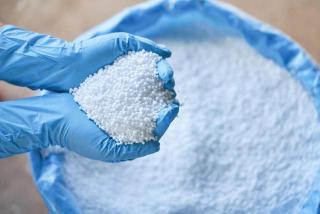
The Government of India is concerned about the fertilizer and pesticide department’s budget, where 97% is spent on subsidies, and is preparing to curb the illegal use of fertilizers.
SNPNEWS.IN News (Gurmail Kamboj): India ranks second globally in the consumption of fertilizers such as DAP, Urea, NPKs, MOP, Triple Super Phosphate, and Single Super Phosphate. To ensure timely availability of fertilizers at controlled rates for farmers, the central government provides subsidies to fertilizer producers and seller companies through the Fertilizer and Pesticide Department.
For the year 2024-25, the central government increased the total allocation for the fertilizer department from ₹168,130.81 crore to ₹191,836.29 crore through supplementary grants to ensure timely availability of the above fertilizers to private and public sector companies. Similarly, the budget estimate (BE) for 2025-26 was ₹ 168 lakh crore, and recently, an additional ₹18,525 crore was approved in the first supplementary demand, bringing the total to approximately ₹1.86 lakh crore. This ensures that farmers receive these fertilizers at controlled rates.
Compared to previous years, due to better monsoon from April to October this year, fertilizer imports of DAP, Urea, NPKs, and MOP increased by 22.3 lakh tonnes (41%) during 2025-26. During the same period, urea exports reached a record 58.62 lakh metric tonnes, up 137%. In the coming time, urea fertilizer demand could double.
Read more News: The Crisis Of DAP & UREA Fertilizers In The State In 2025
According to statistics, excessive use of urea and phosphatic and potassic (P&K) fertilizers beyond requirements is occurring nationwide, forcing the central government to increase subsidies to meet the continuously rising demand.
India’s annual total fertilizer consumption is generally around 60-70 million tonnes (600-700 lakh tonnes). For 2025-26, it is estimated to exceed 70 million tonnes.
● Urea fertilizer demand is likely around 38-40 million tonnes, with domestic production expected at 31-32 million tonnes.
● DAP fertilizer demand could be around 10-11 million tonnes, with domestic production likely 2-4 million tonnes.
● NPKs (complex) demand is estimated at around 12-14 million tonnes.
● MOP demand could be around 3-4 million tonnes, for which the country is fully dependent on imports.
● SSP (Single Super Phosphate) demand could be around 5-6 million tonnes.
● TSP (Triple Super Phosphate) demand is very low, around 0.3-0.5 million tonnes, often included in NPK.
The Government of India is working on a plan to reduce the subsidy budget of the Fertilizer and Pesticide Ministry. For this purpose, the government has reduced the urea bag weight from 50kg to 45kg and started using Aadhaar card-based POS machines for purchasing subsidized fertilizers.
After POS usage, illegal use of subsidized urea for non-agricultural commercial purposes has reduced to some extent, but due to the 5kg weight reduction and nominal use of organic matter (cow dung manure, green manure), urea demand continues to rise.
According to Central Fertilizers & Chemicals Minister J.P. Nadda, the central government is considering linking subsidized fertilizers to land registration to reduce the fertilizer bill. Under this plan, subsidized fertilizers will be provided to farmers in prescribed quantities based on the land registered on the land registration portal. Nadda said work on this plan will start soon. He stated that the objective of this plan is to stop fertilizer black marketing and ensure prescribed fertilizer availability.
India has started producing a large portion of urea in public, private, and cooperative sector company plants. Additionally, some portion of DAP, Triple Super Phosphate, and Single Super Phosphate fertilizers is being produced domestically.
However, the country relies heavily on imports for meeting domestic needs of DAP(70-75%) and MOP (100%). Excessive use of urea fertilizer beyond requirements during 2025-26 has increased the central government’s concerns. If excessive fertilizer use is not stopped, a large portion of the government’s annual budget in coming years will go towards subsidies.