
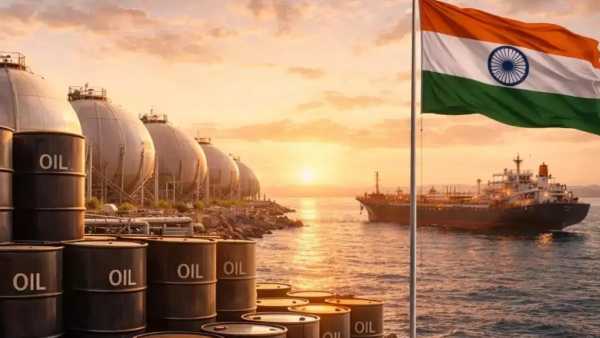
Israel-US-Iran War on 12th Day: India and Many Countries Worldwide Face Severe Disruption in Petrol, Diesel, and Gas Supplies, Situation Heading Toward Extremely Alarming Levels.
SNPNEWS.IN News (Gurmail Kamboj): The Israel-US-Iran war, now on its 12th day, is emerging as a major headache for India and countries around the world. During this war, Israel and the US have destroyed several Iranian oil depots and refineries. In response, Iran has targeted oil refineries in Israel and Gulf countries, leading to a complete halt in oil and gas production in Middle Eastern nations. Qatar has shut down its major LNG facility (Ras Laffan), which supplies a significant portion of the world’s LNG.
Additionally, the near-total closure of the Strait of Hormuz has become a major cause of concern for the world. This route carries approximately 20% of the world’s total oil and LNG (Liquefied Natural Gas). Iran has attacked several ships, causing tankers to get stuck and navigation to halt. This has been ongoing since the early stages of the war.
Analysts worldwide are comparing the current situation to the 1973 Oil Crisis or the Arab Oil Embargo.
On October 6, 1973, Egypt and Syria launched a surprise attack on Israel (on the Jewish holy day of Yom Kippur). The attack aimed to reclaim territories (Sinai, Golan Heights) lost in the 1967 Six-Day War. During this war, the US provided weapons and support to Israel, angering Arab nations.
On October 17, 1973, OPEC member Arab countries (particularly OAPEC, Organization of Arab Petroleum Exporting Countries) imposed an oil export embargo on the US, Netherlands, Portugal, and other Israel-supporting nations. They also began reducing production by 5% monthly. Oil prices rose from $3 to $12 per barrel (equivalent to $20 to $80 in today’s terms), and gasoline prices in the US increased by 40%. Inflation, unemployment, and long lines at petrol pumps became common, ending in March 1974 due to disagreements among Arab nations, but high prices persisted for a long time.
In 1973, the disruption was 4-5 million barrels/day; today, it is 18-20 million barrels/day—3-4 times larger. Today, the US is energy independent, renewables have increased, and strategic reserves are much larger (unlike the 1970s). However, for other countries, the closure of Hormuz is far more serious, as it is a crucial energy route for Asia and Europe.
Read it : Israel-US-Iran War: Iran’s Oil Depots Reduced to Ashes.
80-90% of Gulf oil and LNG goes to Asia, so the impact is most severe in Asian countries.
● India: India imports 85-90% of its oil needs, with about 50% coming from the Gulf. Gas rationing has begun for industries, and there is fear of rising prices for petrol/diesel/LPG, fertilizers, and food. The government has increased alternative oil supplies (from Russia), but the Gulf situation is now visibly affecting India.
India has advocated for diplomacy and de-escalation. EAM Jaishankar has stated that India wants peace and dialogue. An alert has been issued for Indian citizens in Bahrain by the Ministry of External Affairs. Efforts are underway to balance old ties with Iran and strong relations with Israel.
On March 5, 2026, the Indian government directed refineries to increase LPG production, and on March 10, due to the Iran-US-Israel war and the closure of the Strait of Hormuz causing an energy crisis, ESMA has been imposed nationwide. This law gives the government authority to control the supply, distribution, and prices of essential commodities (such as oil, gas, grains, medicines, etc.). By implementing it, the government can prevent hoarding, boost production, and ensure priority distribution.
Due to the Iran war and Hormuz closure, India’s gas and LPG imports have faced major disruption. India imports a large portion of its LPG needs (in 2024-25, out of 3.13 crore tonnes consumed, only 1.28 crore tonnes were produced domestically). This has caused a severe shortage of commercial gas cylinders, creating cooking gas problems in restaurants and hotels across the country, with hoarding risks rising.
The Indian government has invoked the Essential Services Maintenance Act (ESMA) to ensure LPG and natural gas supply, so domestic consumers face no difficulties. This is part of steps taken by the government to control the crisis caused by the war.
● Bangladesh: Relies on imports for 95% of its energy needs and is heavily dependent on LNG from Qatar (which comes via Hormuz). Qatar has shut production, leading to shortages of electricity and fuel. The government has closed universities (advancing Eid al-Fitr holidays), imposed daily limits on fuel sales, and panic buying is occurring nationwide. This could deliver an “earthquake-like” shock to the economy. Efforts are underway to secure diesel supplies from China and India; some supply is coming via pipeline from India.
● Pakistan: Imports over 80% of its oil needs, with LNG from Qatar also coming via Hormuz. Due to supply halts from the Middle East war, oil prices are skyrocketing and fuel shortages are occurring. Prime Minister Shehbaz Sharif announced on March 9 on television that strict austerity measures and fuel-saving steps are being taken (such as restrictions on fuel vehicles, electricity conservation). This is worsening the country’s existing economic crisis, with double-digit youth unemployment and inflation already prevalent. Amid disputes with Afghanistan, border trade with Iraq has halted due to Middle East tensions, leading to panic buying and fuel stockpiling.
Pakistan’s Defense Minister has warned that after the Iran war, there is a risk of encirclement by India-Israel-Afghanistan, and the nuclear program could be targeted. This is escalating regional tensions.
● China: The world’s largest oil importer. Refineries have reduced production, manufacturing costs have risen. Efforts to increase Russian oil supplies, but long-term inflation and export impacts loom.
● Japan and South Korea: Over 90% of oil imports from the Gulf. Japan relies on imports for 87% of its energy. Strategic reserves are being used, but risks of slowed economic growth and rising inflation exist.
● Europe: Major impact on gas supply (due to Qatar LNG halt). Natural gas prices have risen 30-50%. Less impact on oil due to sources like Norway. Fears of rising inflation and stalled economic growth. The EU has stated there is no immediate supply crisis yet, but monitoring continues. Impact on jet fuel and refined products.
● United States: Least affected due to energy independence and being a major exporter. Gasoline prices have risen ($3+/gallon), but Trump has claimed the war will end quickly and Hormuz will reopen. Fears of impact on midterm elections. American companies (like Exxon) could benefit by filling the gap.
● Gulf Countries (Suppliers): Saudi Arabia, UAE, Qatar, Kuwait, Iraq—production reduced or halted as exports are not possible and storage is full. Revenue losses, major economic impact. Qatar’s LNG facility closed.
● Australia, the largest fuel importer in Asia, faces potential shortages. Inflation and debt risks rise in Africa and developing countries.
Trump has said the war is “very complete” and Hormuz could reopen soon, but disruptions continue. Prices are fluctuating. Fears of global inflation and recession, especially in Asia.