
In the midst of the Israel-US-Iran war, while the world faces the risk of major disruptions to oil and gas production from the Gulf countries and potential closure of the Strait of Hormuz by Iran, the possible closure of the Bab al-Mandeb Strait could trigger a severe global economic crisis.
SNPNEWS.IN News (Gurmail Kamboj): Due to the Israel-US-Iran war, the world is already facing an energy crisis as oil and gas production units in the Gulf countries have shut down and Iran has closed the Strait of Hormuz. In this situation, Iran has warned that if the US or Israel attempts a ground invasion or attacks Kharg Island, Iran will close the Bab al-Mandeb Strait. This would plunge the world, which is already struggling with shortages of crude oil and gas, into complete darkness.
During the Israel-US-Iran war, on the night of Saturday, 22 March 2026, US President Donald Trump posted on Truth Social, stating that if Iran does not fully open the Strait of Hormuz within the next 48 hours, the United States will begin attacks on Iran’s power plants (energy infrastructure) and “obliterate” them.In response to Trump’s threat, Iran stated that if the US and Israel attempt to target and destroy Iran’s economic infrastructure by attacking its power plants (energy infrastructure), Iran will “obliterate” American military bases in the Gulf countries, commercial institutions, water desalination plants in the Gulf nations, and Israel’s economic infrastructure.
On Monday, 23 March 2026, Trump postponed his threat and announced that the US is delaying attacks on Iran’s power plants for 5 days. He cited “very good and productive conversations” as the reason, which raised hopes for a deal between the two sides. Subsequently, the Trump administration sent a 15-point ceasefire plan to Iran, which Iran rejected while putting forward its own conditions. Iranian officials called it “fake talks” and stated that they are not engaged in negotiations with the US.
Read It : Trump’s Ceasefire Claims, Attacks Continue from both sides.
The Israel-US-Iran war has severely impacted oil and gas production capacity in the Gulf countries and oil shipments through the Strait of Hormuz, causing oil prices to rise sharply. This has raised fears of increased global inflation, reduced food production, and worsening food crises in poorer countries. The International Monetary Fund (IMF) has also described a prolonged war as a threat to the global economy.
The Israeli Air Force and US military have continued large-scale airstrikes on ballistic missile sites, production units, and other military targets in Iran. The Israel Defense Forces (IDF) reported that since the start of the war, they have struck over 600 missile sites. On 23-24 March, Israel conducted strikes on more than 50 targets in northern and central Iran, including missile launch and storage sites. US CENTCOM stated that they have hit over 10,000 targets in Iran, destroying or damaging nearly two-thirds of Iran’s missile, drone, and naval production facilities.
Iran has also carried out continuous missile and drone attacks on Israel. Between 23-25 March, Iran launched several waves (approximately 9-10 waves) of missiles at Israel, including cluster missiles. Significant damage occurred in areas such as Tel Aviv, Arad, and others in Israel, with many people injured. Israel’s air defense intercepted many missiles, but some landed, causing major economic losses to Israel. Iran has also continued attacks on Gulf countries.
Amid the tense situation in the Gulf countries, the US is increasing its military presence in the region. It has deployed approximately 1,000 to 3,000 paratroopers (rapid deployment units) from the 82nd Airborne Division, along with about 5,000 Marines and thousands of sailors. Around 50,000 US troops were already present in the region. The Pentagon has prepared detailed plans for a ground invasion, including discussions about capturing Kharg Island (Iran’s main center for oil exports) to create pressure to reopen the Strait of Hormuz.
In response, Iran has stated that it is prepared for a ground invasion and has described it as a “disaster for America.” They have spoken of setting traps on their approaches and increasing defenses. In addition to the Strait of Hormuz, Iran has threatened to close or disrupt another important maritime route, the Bab al-Mandeb Strait. This could create a major crisis for the world.
Through the Tasnim News Agency, the Iranian military warned that if the US carries out a ground invasion on Iranian territory or islands (especially Kharg Island) or exerts naval pressure, Iran could open a “surprise front” and close the Bab al-Mandeb Strait with the help of Houthi rebels. Considering the risk of attacks on this route via the Houthis, the US and international naval coalition view this threat as a “heightened risk” and have increased surveillance in the region. These threats represent an asymmetric warfare strategy for Iran.
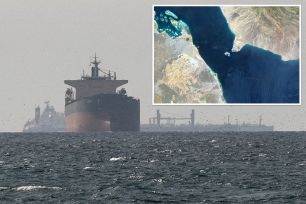
Iran and its allies are preparing to target the Bab al-Mandeb Strait, which lies at the southern end of the Red Sea between Yemen (Arabian Peninsula) and Djibouti/Eritrea (Africa). Ships traveling from the Red Sea can reach the Indian Ocean via the Gulf of Aden through this strait. To the north, the Suez Canal connects the Red Sea to the Mediterranean Sea. Therefore, this entire route is extremely important for Europe-Asia trade.
Approximately $1 trillion worth of goods and about 10% of the world’s trade pass through this route every year. If this route is also disrupted—along with the already disrupted Strait of Hormuz—it would deliver a massive shock to global oil supplies, shipping routes, and the economy. Ships would have to be rerouted via the longer Cape of Good Hope route, increasing costs and time, which would lead to higher inflation and unemployment worldwide.