
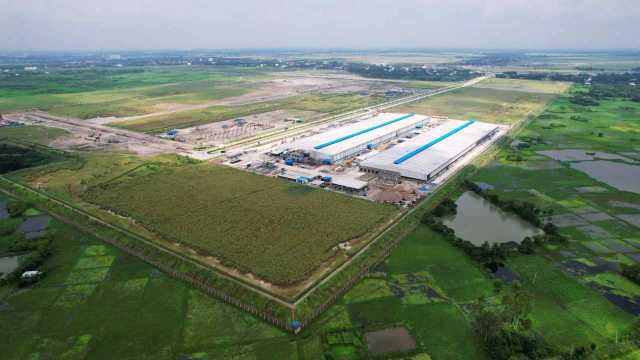
Bangladesh’s Prime Minister Muhammad Yunus’s government, through the Bangladesh Economic Zones Authority (BEZA) board meeting, has cancelled the economic zone agreement signed with India in 2015.
SNPNEWS.IN News (Gurmail Kamboj): In July 2024, the Students Against Discrimination movement against Sheikh Hasina’s government in Bangladesh failed to be suppressed despite attempts involving violence. Following this, on 5 August, Prime Minister Sheikh Hasina resigned and sought refuge in India. Sheikh Hasina, considered pro-India leader, after her government’s fall, student leaders met with military officials and President of Bangladesh on 8 August, President Mohammad Shahabuddin administered the oath to Muhammad Yunus as Chief Adviser (interim Prime Minister).
From the beginning of his tenure, Yunus showed a tilt towards China. During his visit to China in 2025, 9 agreements were signed between the two countries, including major economic, defence cooperation, and technical collaboration. These included the Teesta River project, Mongla Port upgrade, and other investments. China also announced $2.1 billion in investment and grants for Bangladesh. Additionally, during his tenure, efforts were made to increase closeness with Pakistan and Turkey. The influence of extremists has increased in the Yunus government, who have been anti-India.
Reasons for tension between India and Bangladesh:
● India has given refuge to Hasina since August 2024 and even after Bangladesh court sentenced her to death in 2025, has not sent her back.
● In April 2025, India cancelled the 2020 transshipment facility, which allowed Bangladesh to send its goods to third countries (such as Nepal, Bhutan, Myanmar) through Indian land customs stations, ports, and airports.
● In January 2026, this was further strengthened and completely closed for new cargo (grace period given for old cargo). Due to this decision, Bangladesh’s exports (especially garments) costs increased (estimated $20-40 million annually), logistics delays occurred, and trade with neighboring countries was affected.
● In the 2026-27 budget, India halved development assistance (grant/aid) to Bangladesh from Rs 120 crore to Rs 60 crore due to tensions between the two countries and attacks on minorities.
● In January 2026, India declared its diplomatic missions in Bangladesh as “non-family posting” and recalled diplomats’ families. This decision was taken due to attacks on Hindu minorities in Bangladesh and security threats. India has noted over 2,900 such attacks under the Yunus government and condemned them.
● In January 2026, the BCCI (Board of Control for Cricket in India) excluded Bangladeshi player Mustafizur Rahman from IPL, which is said to be a decision after opposition from BJP leaders. In response, Bangladesh stopped IPL broadcast and refused to play in the T20 World Cup in India.
● In January 2026, from India, Hasina targeted the upcoming elections in Bangladesh and the Yunus government, which increased anti-India sentiments and protests in Bangladesh, and visa services were temporarily suspended.
Read It: Former Bangladesh Prime Minister Sentenced to Death
Bangladesh government has cancelled the 2015 economic zone agreement with India for an economic zone in Chattogram (Mirsarai) on approximately 850 acres of land (with India’s cooperation) and handed over that land to China.
The decision to cancel the economic zone agreement was taken in the BEZA board meeting of Muhammad Yunus’s interim government on 26 January 2026. Here, China will set up a drone (UAV) manufacturing plant and transfer technology. This agreement is between the Bangladesh Air Force and China’s CETC company. The project cost is approximately Tk 608 crore (US$55 million), and production at this plant may start by the end of the year. This project is 100 km from India’s border.
In addition, Bangladesh has also cancelled the defence deal with India (such as ₹180 crore order for ship construction with GRSE). According to defence cooperation agreements, Bangladesh will receive 20 fighter jets from China. China is emphasizing increasing its military and economic presence in Bangladesh (Bay of Bengal).
According to available information, irregularities have been alleged in the power supply deal with Adani Power, due to which it is also likely to be cancelled. One defence contract (GRSE with tugboat) has already been cancelled. Overall, more than 10 old agreements with India are cancelled or under review.