
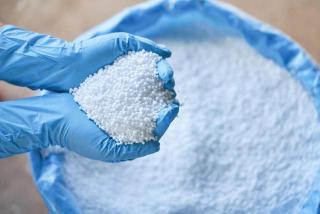
Sangrur has become the district with the highest urea consumption in the country during 2024-25 (2,82,800 metric tonnes), prompting the Central Government’s Ministry of Chemicals and Fertilizers to issue a notice and seek a response.
SNPNEWS.IN (Gurmail Kamboj): On January 9, 2026, the Central Government’s Ministry of Chemicals and Fertilizers released a list of 100 districts across the country involved in the illegitimate usage of urea fertilizer. Among these, Punjab’s Sangrur district topped the list with the highest consumption (2,82,800 metric tonnes), as per the reports that have surfaced. Following this, the Central Government sent notices via demi-official (DO) letters to the district’s DC and other districts flagged for illegitimate usage. The notice demands immediate action for soil health, water protection, public health, and agricultural sustainability.
The report issued by the Ministry of Chemicals and Fertilizers (MoCF) states that the imbalanced and excessive use of fertilizers has reached dangerous levels in the concerned districts. Due to this, Sangrur’s soil is considered the most toxic in the country, leading the Centre to issue a strict notice. In Punjab, urea usage is significantly higher than the national average, posing a challenge to soil fertility and water quality.
In Punjab, the usage is significantly higher than the national average (for example, in wheat, the recommended amount is 0.9–1.1 quintals per acre, but the actual usage reaches up to 1.5-1.8 quintals), for which the Centre has issued notices to reduce it.
Harms of Excessive Urea Usage:
● Impact on Soil Health:Soil Acidification: Excessive urea usage releases H⁺ ions during the nitrification process, lowering the soil’s pH. This reduces the availability of nutrients (such as phosphorus, potassium, and micronutrients).
Decline in Organic Carbon and Fertility: Over the long term, organic matter decreases, soil structure deteriorates, aeration reduces, and soil fertility declines.
Nutrient Imbalance: Excessive focus on nitrogen alone leads to deficiencies in phosphorus, potash, and micronutrients, reducing crop disease resistance and increasing pest attacks.
● Impact on Water Quality:Nitrate Leaching: Excess urea leaches as nitrate (NO₃⁻) from the soil into groundwater. In Sangrur, nitrate levels exceed permissible limits.
Increase in Uranium and Other Toxic Elements: Due to excessive fertilizer use and over-exploitation, elements like uranium (over 200 ppb, permissible limit 30 ppb), arsenic, cadmium, chromium, and lead are rising in groundwater. According to the CGWB report 2025, Sangrur and Bathinda have the highest uranium levels.
Increase in Salinity and Alkalinity: Residual sodium carbonate and salinity have increased in 25% of samples, leading to land degradation.
● Impact on Public Health:Uranium and Heavy Metals: Long-term consumption can cause kidney disorders, cancer, chronic diseases, and effects on future generations.
Nitrates: High-nitrate water can cause Blue Baby Syndrome (methemoglobinemia) in children and other health issues.
Poison in Food Chain: Chemical residues accumulating in crops increase risks of cancer, kidney diseases, and reduced fertility.