
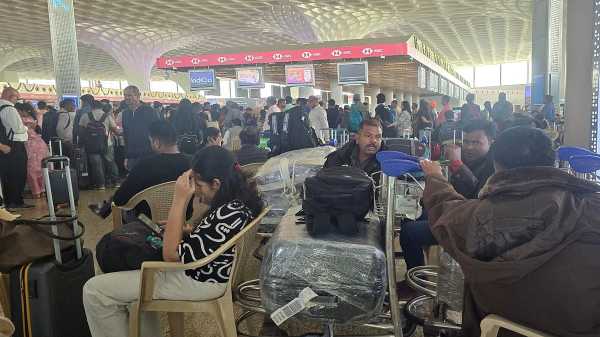
India’s largest airline, IndiGo, is facing severe backlash after the implementation of new Flight Duty Time Limitations (FDTL) rules, which mandate more rest for pilots and crew members. The cost of this increased rest is now being borne by passengers.
Sunam: SNPNEWS.IN (Gurmail Kamboj), since the full enforcement of the FDTL rules across the country, a large number of domestic and international flights have been cancelled. IndiGo, India’s biggest airline and its millions of customers, has been the worst affected. In just the last four days, IndiGo has cancelled more than 1,500 flights. As a result, long queues have formed at airports nationwide, and thousands of passengers — including children, elderly people, and those who are ill — are stranded at airports across the country.
Several videos have surfaced showing heated arguments between passengers and airline staff. People are seen demanding their luggage, and many passengers are comparing the situation to the 2016 demonetisation chaos. They allege that airlines implemented the FDTL rules without any prior preparation or transition plan, forcing passengers to suffer humiliation and inconvenience.
Read It: TATA Sons Parent Company Of Air India Announced Rs 1 Crore Assistance To The Family Of The Deceased.
In January 2024, the Directorate General of Civil Aviation (DGCA) notified revised FDTL rules based on pilot rostering practices, fatigue reports, and global standards. These were fully enforced from 1 November 2025. Since then, airlines across India have had to cancel thousands of flights. IndiGo has been hit the hardest because it is the largest airline in India and Asia, operating over 2,200 daily flights with a fleet of 434 aircraft and carrying approximately 320,000 passengers per day. It has consistently carried more than 10 million passengers per month in 2024. However, the sudden wave of cancellations over the past four days has plunged the airline into crisis.
IndiGo operates an extensive network (45 international and 90 domestic routes) and, after the FDTL rules came into effect, is facing an acute shortage of crew.
Several factors explain why IndiGo has been impacted more than others: it is a low-cost carrier whose profitability depends heavily on maximum utilisation of aircraft and crew. Its planes and crews fly significantly more hours than those of other Indian airlines, and it operates with relatively lean staffing. With the new rules, even a 10% cut in flights means around 230 flights cancelled daily — a massive operational blow. In comparison, India’s second-largest airline, Air India, operates less than half the number of flights IndiGo does, so the impact on it is far less visible.
What is FDTL?
Flight Duty Time Limitations (FDTL) are regulations introduced in the Indian aviation sector to protect pilots and cabin crew from fatigue. Issued by the DGCA under Civil Aviation Requirement (CAR) Section 7, Series J, Part III, these rules control duty hours, flight time, night duties, and mandatory rest periods, with the primary goal of enhancing passenger safety.
Latest Developments:
The DGCA has summoned IndiGo for a meeting and has granted temporary relaxation in the rules. It has immediately withdrawn, with immediate effect, the recent strict instructions regarding weekly rest periods for crew members. This move will provide significant relief to all airlines in the country, especially those like IndiGo that were facing practical difficulties in operations. The regulator clarified that the step was taken in response to airlines’ demand to ensure operational stability.
Meanwhile, amid the chaos, IndiGo has publicly apologised to passengers for widespread delays and large-scale cancellations. The airline has promised full refunds for cancelled tickets and announced waiver of rescheduling/cancellation fees from 5 to 15 December. It will reduce flight schedules starting 8 December and aims to return to full normalcy by February 2026.
Opposition parties have held the Prime Minister and the Civil Aviation Minister responsible, alleging that enforcing the rules without a proper transition plan has led to the current crisis.